Portable 3D Bladder Scanner for Non-Invasive Bladder Volume Measurement
This portable 3D bladder scanner is engineered for healthcare professionals who need fast, accurate, and completely non-invasive bladder volume measurement at the point of care. Whether you are managing urinary retention on a busy post surgical floor or conducting routine assessments in a urology clinic, this ultrasound bladder scanner delivers reliable results in under three seconds with a single button press.
The Portable 3D Bladder Scanner device combines advanced 3D ultrasound imaging with an intuitive touchscreen interface to give clinicians a powerful, portable diagnostic tool that requires no specialized sonography training and no annual calibration.
How This Non-Invasive Bladder Scanner Works
The scanner uses a 3.5 MHz 3D ultrasound probe to capture 12 or 24 cross sectional planes of the bladder through the abdominal surface. The system then generates a detailed volumetric rendering and calculates the urine volume automatically, displaying the result in milliliters on the 10.3 inch TFT LCD touchscreen.
The entire process takes less than three seconds from probe placement to result. There is no discomfort to the patient, no risk of infection, and no need for catheterization. This makes it the ideal bladder volume measurement device for any clinical environment where speed, accuracy, and patient comfort are priorities.
Measurement Specifications at a Glance
Volume range of 0 to 2000 mL with accuracy of ±5% for volumes at or above 100 mL, and ±5 mL for volumes below 100 mL. The probe operates at 3.5 MHz and supports scan depths of 160 mm, 180 mm, and 200 mm. Display modes include Expert and Easy, making the device accessible to both experienced clinicians and nursing staff who are new to bladder scanning.
Post Void Residual Scanner for Urology and Beyond
One of the most critical applications for this device is measuring post void residual volume. As a dedicated post void residual scanner, it provides the quantitative data that urologists, gynecologists, and rehabilitation specialists need to make informed clinical decisions about catheterization, medication, surgical intervention, and bladder retraining programs.
PVR measurement is foundational to evidence based urological practice. Elevated residual volumes can indicate bladder outlet obstruction, detrusor underactivity, or neurogenic bladder dysfunction. Without accurate PVR data, clinicians are left relying on subjective assessment or unnecessary invasive procedures. This PVR bladder scanner eliminates that uncertainty.
Why PVR Accuracy Matters in Clinical Practice
Accurate post void residual measurement is essential for patients with prostatic hypertrophy, urethral stricture, neurogenic bladder, and urinary incontinence. It provides the baseline data needed before and after surgical intervention, supports urodynamic and uroflowmetry testing, and guides intermittent catheterization schedules. Every scan contributes to a more complete clinical picture and a more targeted treatment plan.
Ultrasound Bladder Scanner Built for Every Department
This ultrasound bladder scanner is not limited to urology. Its clinical applications extend across virtually every department in the hospital, outpatient clinic, rehabilitation center, and long term care facility.
Urology Applications
In urology, this device serves patients with frequent or urgent urination, weak stream, prostatic hypertrophy and hyperplasia, post surgical urinary retention, kidney transplant monitoring, extracorporeal lithotripsy follow up, urethral calculi, low and high compliance bladders, bladder cancer, prostate cancer, and catheter removal recovery. It also supports urodynamic testing and uroflowmetry by providing pre and post test residual volume measurements.
Obstetrics and Gynecology Applications
In obstetrics, the portable 3D bladder scanner monitors postpartum urine volume to prevent urinary retention, particularly in patients who have undergone cesarean section. For pelvic floor rehabilitation, it helps evaluate recovery progress and provides residual urine data to guide bladder retraining protocols.
In gynecology, it prevents postoperative urinary retention following procedures such as uterine cancer resection, ovarian cancer surgery, and sling procedures like TVT O and TVT S for uterine or rectal prolapse. It also supports the diagnosis and treatment of conditions caused by incomplete voiding, including pelvic inflammatory disease and urethritis.
Proctology and Anorectal Surgery Applications
After common proctologic surgeries, approximately 80 percent of patients experience urinary retention due to surgical site swelling and the effects of anesthesia. This non-invasive bladder scanner allows clinicians to confirm the grade of retention and develop a scientific catheterization plan that prevents secondary injury. It is valuable for patients recovering from hemorrhoid surgery, anal fissure repair, fistula procedures, perianal abscess drainage, rectal cancer resection, and colon cancer surgery.
Rehabilitation and Neurological Applications
Many conditions treated in rehabilitation departments cause urinary retention and incontinence. This bladder volume measurement device helps monitor urine volume and measure post void residual to support bladder function retraining for patients with spinal cord injury, stroke, encephalopathy, cerebral injury, paraplegia, high paraplegia, neurogenic bladder, Parkinson’s disease, cerebral thrombosis, and those in a vegetative state. For these patients, consistent bladder monitoring improves quality of life and preserves dignity.
Additional Departments
The scanner also supports clinical workflows in neurology, orthopedics, anesthesiology, internal medicine, emergency departments, male health specialists, and senior care centers. Any setting where urinary retention is a risk or where catheterization decisions must be made benefits from having an accurate, portable, and easy to use ultrasound bladder scanner at the bedside.
Portable Design with Multiple Configuration Options
True portability is a defining feature of this device. It supports three practical configurations to fit the way your team works.
Rolling Cart Stand
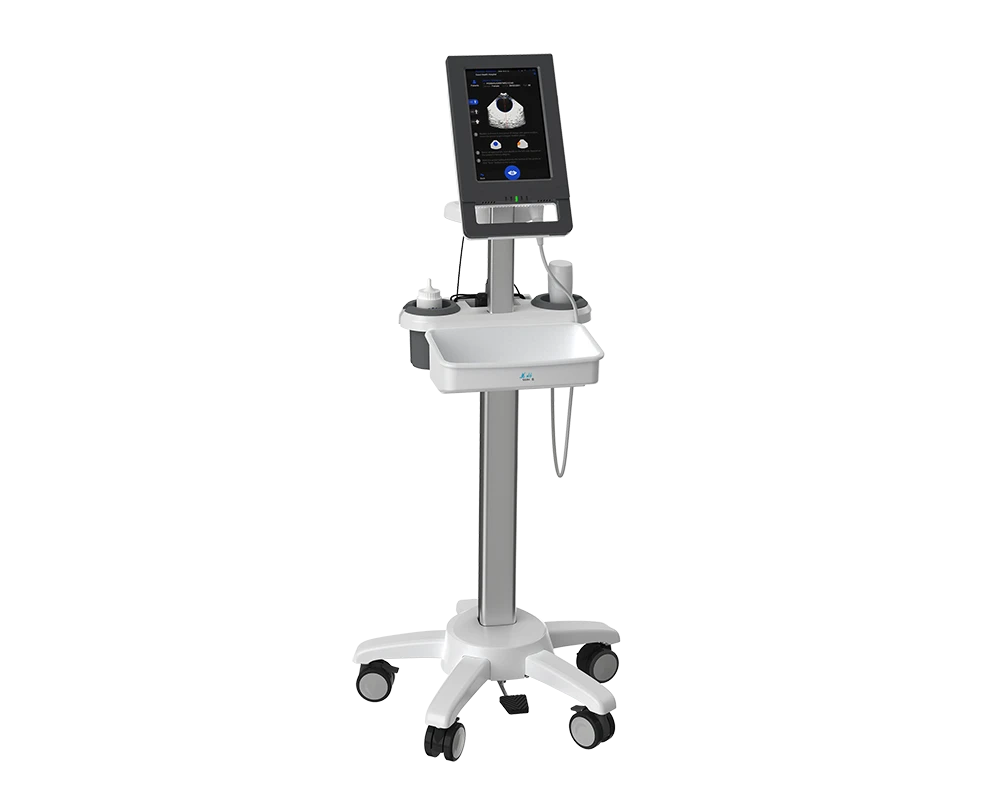
Mount the scanner on the included rolling cart stand for hospital floor rounds and multi room workflows. The wheeled base with locking casters allows easy transport between patient rooms, surgical recovery units, and outpatient exam areas. The adjustable arm positions the touchscreen at an optimal viewing angle during scanning.
Compact Desktop Stand
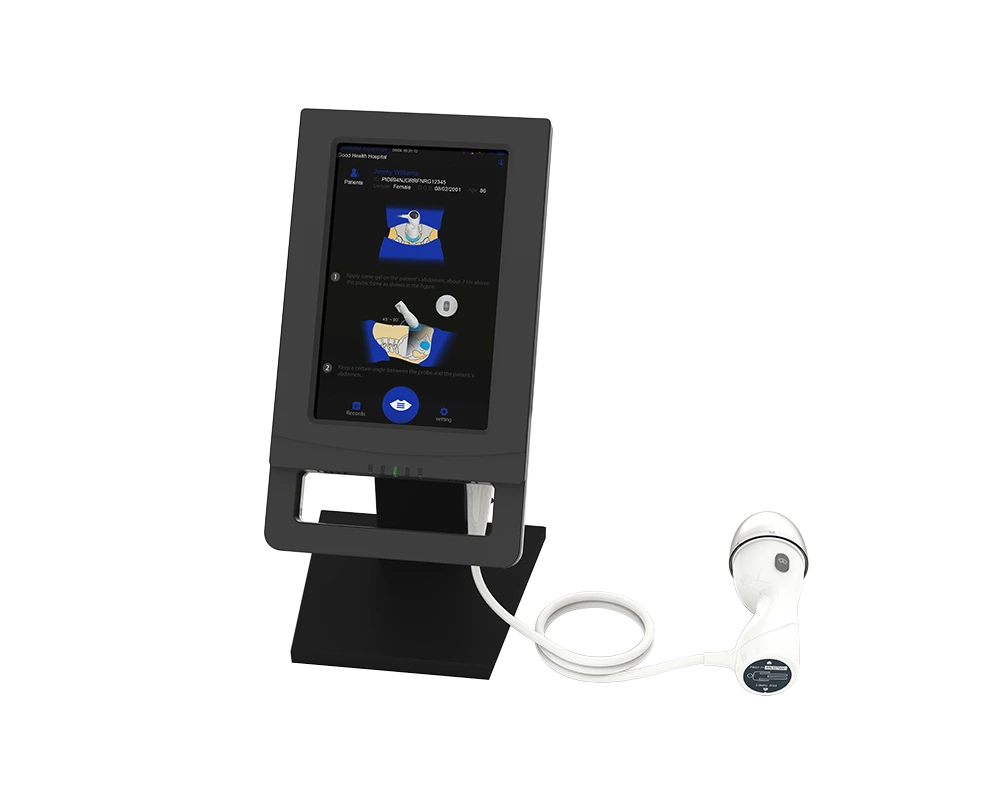
For smaller clinical environments such as outpatient urology offices, gynecology exam rooms, and rehabilitation therapy rooms, the desktop stand offers a space saving configuration that keeps the scanner accessible without occupying valuable floor space.
Handheld Bedside Use
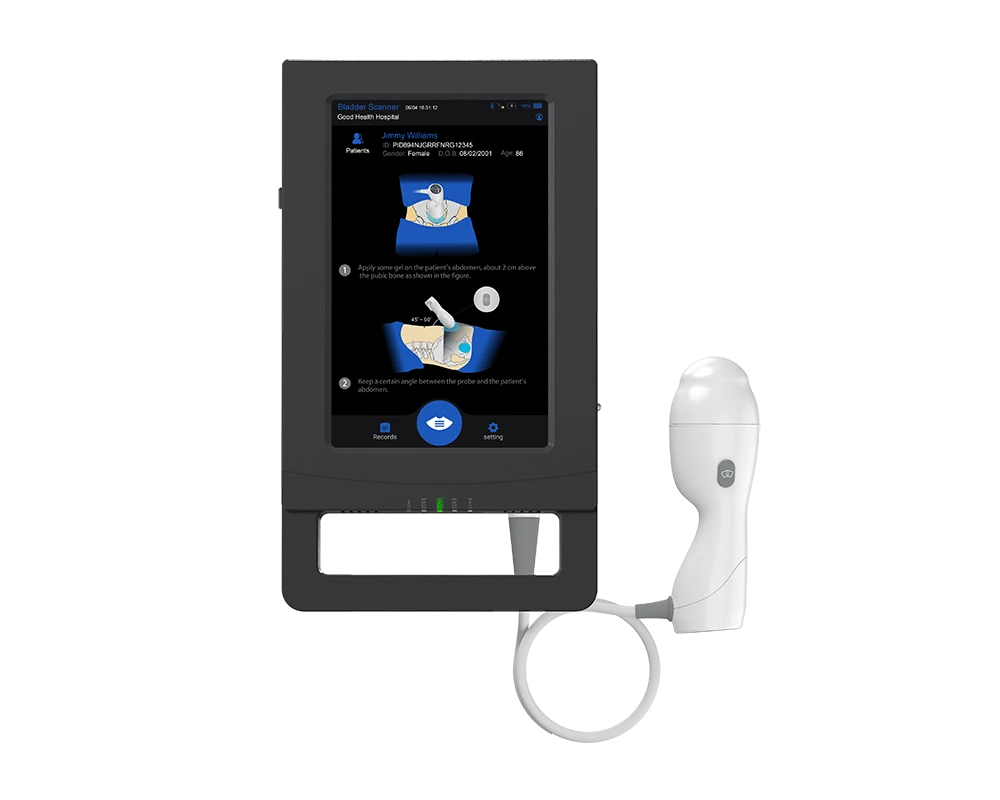
The lightweight host unit and ergonomic probe design also allow for direct bedside use without any stand at all. This is ideal for emergency department assessments, ICU rounds, and point of care bladder scanning in senior care facilities where mobility is essential.
Connectivity and Data Management
Seamless integration into your existing clinical workflow is built into the design. Wi-Fi and Bluetooth connectivity enable wireless printing to compatible printers, while the USB Type C port supports direct data transfer to PCs and external storage devices such as flash drives.
The internal memory stores up to 10,000 patient cases, allowing your team to build a comprehensive record of scans over time. Patient data including volume readings, 3D images, and case information can be exported for review, documentation, or integration with electronic health record systems.
The built in thermal printer provides on the spot printouts of scan results, which is especially useful in clinical environments where immediate documentation is required for chart notes or patient handoff.
Reducing Unnecessary Catheterization and Infection Risk
One of the most compelling benefits of adopting a non-invasive bladder scanner is the measurable reduction in unnecessary catheterization. Every catheterization that is avoided represents one less opportunity for catheter associated urinary tract infection, which remains one of the most common healthcare associated infections worldwide.
This device gives clinicians the objective data they need to determine whether catheterization is truly necessary or whether the patient can be monitored and managed conservatively. Over time, this translates into fewer infections, shorter hospital stays, reduced antibiotic use, and improved patient satisfaction scores.
For patients, the experience is transformative. A painless, three second scan replaces what would otherwise be an invasive, uncomfortable, and potentially harmful procedure. This is particularly meaningful for elderly patients, post surgical patients, and those with neurological conditions who may already be experiencing significant physical and emotional distress.
Benefits for Medical Staff and Healthcare Institutions
For Clinicians and Nursing Staff
High precision data helps doctors make more accurate diagnoses, improve treatment efficiency, and shorten treatment cycles. The device requires no increase in nursing skill requirements, making it accessible to staff at all experience levels. It strengthens evidence based medicine practices and enhances the overall effectiveness and efficiency of clinical operations.
For Healthcare Facilities
Facilities that adopt this portable 3D bladder scanner can expect reduced rates of lower urinary tract related nosocomial infections, increased patient throughput, and enhanced institutional reputation for patient centered care. The device supports compliance with quality metrics and patient safety initiatives related to catheterization reduction and infection prevention.
For Patients
Non-invasive measurements improve patient satisfaction and experience. Reducing unnecessary catheterization means less physical trauma, lower risk of complications, and shorter recovery times. Patients benefit from faster medical consultations and reduced overall cost of care.
Technical Specifications
Here is a complete overview of the device specifications for procurement and clinical engineering review.
Probe frequency is 3.5 MHz. Volume measurement range is 0 to 2000 mL. Accuracy is ±5% for volumes at or above 100 mL, and ±5 mL for volumes below 100 mL. Scan depth options are 160 mm, 180 mm, and 200 mm. Scan planes are 12 or 24. Display mode options are Expert and Easy. Continuous working time is 2 hours or more on a full charge. Scan speed is under 3 seconds. Display screen is a 10.3 inch TFT LCD touchscreen. Storage capacity is up to 10,000 cases. Output interface is USB Type C. Network connectivity includes Wi-Fi and Bluetooth. Printing is supported via Wi-Fi print and Bluetooth printer. Multiple language support is included.
What Is Included in the Box
Everything you need to begin scanning is included. The package contains the scanner host unit, 3D ultrasound probe, power adapter, rolling cart stand, compact desktop stand, and complete user documentation.
Who Should Consider This Portable 3D Bladder Scanner
This device is designed for urologists, gynecologists, obstetricians, proctologists, rehabilitation physicians, neurologists, emergency medicine physicians, anaesthesiologists, nursing staff, and clinical administrators who are responsible for equipping their departments with reliable, accurate, and cost effective diagnostic tools.
If your facility is looking for a bladder scanner for hospitals, outpatient clinics, rehabilitation centers, nursing homes, or senior care facilities, this portable 3D bladder scanner delivers the accuracy, portability, and ease of use that modern clinical practice demands.
For questions about pricing, volume orders, or clinical demonstrations, please contact our team. We are happy to help you find the right configuration for your department and patient population.